January’s Letter from Liz
Each month, we publish a letter from Liz Slade, the chief officer for the General Assembly. This is Liz’s letter for January 2026.
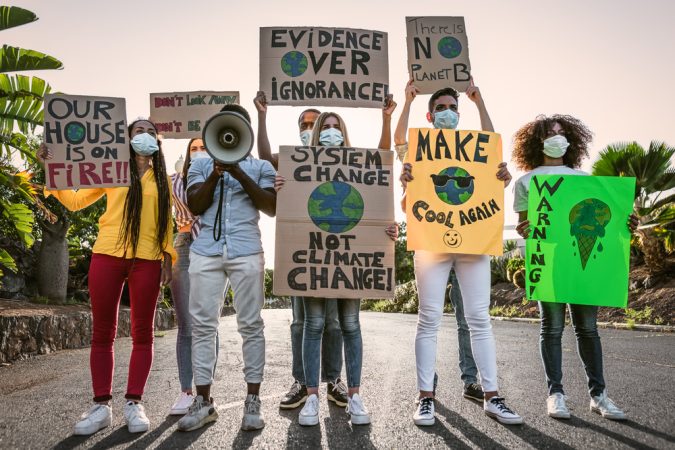
I encourage you to read this recent article in the Church Times from Rupert Read, a Quaker and Buddhist who leads the Climate Majority Project (and is an ally of ours – he spoke at Unitarians for Climate Justice’s event at Hinckley last year).
He writes of the role of the church in the climate crisis (and all the intersecting crises we are witnessing) as being “to reclaim spiritual leadership, to speak clearly of the ecological and civilisational forms of darkness which society is entering, and to evoke an eco-spirituality that refuses false comfort.”
The Climate Majority Project that Rupert leads aims to create a connecting space for all those who are concerned about the climate crisis, recognising that this is by no means a niche interest, or the preserve of those who will glue themselves to the road in protest. It also resolutely honours the importance of inner work when we engage with the climate crisis – this is woven through all their work, but most explicitly in the new Inner Climate Response Alliance that they were part of creating, and has just launched with Lottery funding. Facing the impact of the climate crisis is not for the faint-hearted, and yet it is not something that can be ignored.

The recent government report communicating the security risks to the UK of the climate and biodiversity crisis (which states that “every critical ecosystem is on a pathway to collapse”) as well as the information shared at the National Emergency Briefing that Ann Howell, our Social Action Officer, and I attended in November, show how stark and serious our context is.
As Rupert Read says in his article “What is needed now is spiritual adaptation: the courage to face the abyss, refusing false hope, labouring together for transformative adaptation.”
Rupert’s article goes on to explore the more practical roles that a church can play in offering space to the local neighbourhood in times of crisis – whether that’s opening doors to a cool space on a day of extreme heat, or offering a trusted place of connection, information, and safety in times of disaster. He builds on the Adam Greenfield’s concept of the ‘lifehouse’; Adam says more about how underutilised churches can be used for this purpose here.
I can see huge value in this practical lens. And at the same time, I feel wary of the risks of seeing churches primarily as bricks and mortar. Yes, let’s put their physical form in service to the community – but let’s not fall into the idea that their physical form is all they are.
Let’s also not fall into the idea that our only means of action is to put our collective weight behind lobbying politicians for change.
I have heard some climate activists talk about faith groups through this lens – that we are well-networked communities through which protest and political action can be organised.
These are all possible, but miss the most powerful role that congregations can play in engaging with the climate and nature crisis.
So this led me to put together a list of the ways in which congregations can meet this moment:
- Offering solace to those who are scared
- Fostering courage to face up to our horrific realities
- Learning how to be in relationship well – with each other and with our own inner lives
- Learning how to navigate uncertainty with wisdom, and practicing surrender rather than seeking control
- Developing the practice of imagining a better world together
- Sharing spiritual practices that can help us deepen our steadfastness in times of fear
- Benefiting from the wisdom of humans in other times and other places who have experienced loss and disaster
- Practicing collective joy and gratitude
- Strengthening relationships in our communities so we are ready to be there for each other in times of crisis
- Reminding us that happiness is not reached through money, power, and ‘stuff’ – and that the roots of the climate crisis are in this misconception
These are all part of the ‘spiritual adaptation’ that the Church Times article speaks of, and are all things that all of our congregations have been doing forever.
I’m sure you could all add to this list with the things that your congregations have always done to serve people in times of crisis.
The crisis now affects every one of us, and the most vulnerable soonest and most acutely.
Stephen Lingwood, Unitarian pioneer minister in Cardiff, talks eloquently about the power of ‘Climate Cafes’ in his recently interview on our People So Bold podcast. Several congregations are hosting these, as places for anyone to come and share their feelings on the crisis we are in – places that can be hard to find in the busyness of daily life, and when the scale of the crisis can feel too big to mention at the school gates or in the lunch room.
I am strongly convinced that in facing up to the climate crisis, one of the most powerful things we can do is keep on investing in the health of our congregations, supporting our ministers in their work, and getting ever stronger at welcoming those who are feeling the fear of the times we find ourselves in – particularly as they may feel theological or cultural barriers to many other places of worship.
Perhaps this message feels depressing, alarmist, or hopeless. But for me, there is enormous energy and hope in attuning to the crisis and knowing we are stewarding something that can have an impact that many secular activities won’t achieve. The technological and political work to tackle the climate crisis is essential, and deserves our support – but our unique offer of free and inquiring spiritual and religious communities is essential to these times