November 2025’s update from Liz Slade
November saw us wrap up the three-part series, ‘There is a Season’, co-hosted between me, Lizzie Kingston-Harrison, and Iona Lawrence and Linda Craig from the Decelerator team. It was powerful, and I’m grateful to all those who took part.
Those of you who came to the 2024 GA annual meeting will recall Linda, a Quaker, talking about the Decelerator’s work in supporting charities and other civic organisations have good endings – and later that year we hosted a webinar to share more of the Decelerator’s work. Since then, some Unitarians have taken up the offer of confidential, free support via the Decelerator’s hotline. We recognised that we wanted to create a collective space for Unitarians to go deep into the questions of endings together, and ‘There is a Season’ was born.
Unlike the secular charities that the Decelerator work with, there was no barrier to Unitarians engaging with meditation (our thanks to Richard Bober of the Meditation Fellowship for grounding each session for us) and ritual to explore a collective appreciation for the deep work of transitions. The results were moving and powerful, and helped us learn a lot about the experience of change in our communities. Congratulations to Lizzie for her skill and wisdom in shaping the series.
We’re grateful for this partnership with the Decelerator team, whose funding allows them to work with us for free; they of course recognise that in Britain today there are a great many places of worship that are finding that their old ways of working aren’t sustainable, and so are finding themselves at a crossroads. We hope that our work together can inform and support groups beyond the Unitarian movement, and it’s good to be able to be pioneers in this work.
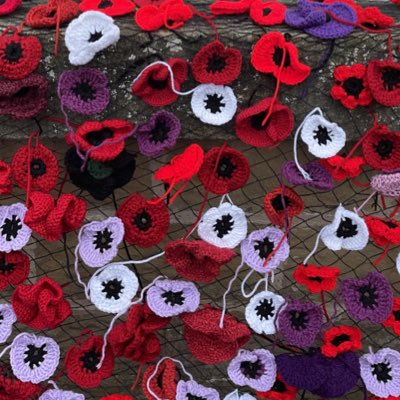
November, of course, means Remembrance Day, and we’re grateful to GA President, Prof Geoff Levermore, for representing our movement at the Cenotaph. Then comes InterFaith Week, and it’s good to see that this remains a fixture for many faith groups despite the disbanding of the InterFaith Network last year. A newer fixture in the November faith calendar is Safeguarding Sunday, which falls on the Sunday after Remembrance Day, and it was wonderful to see that Unitarian congregations are marking it.
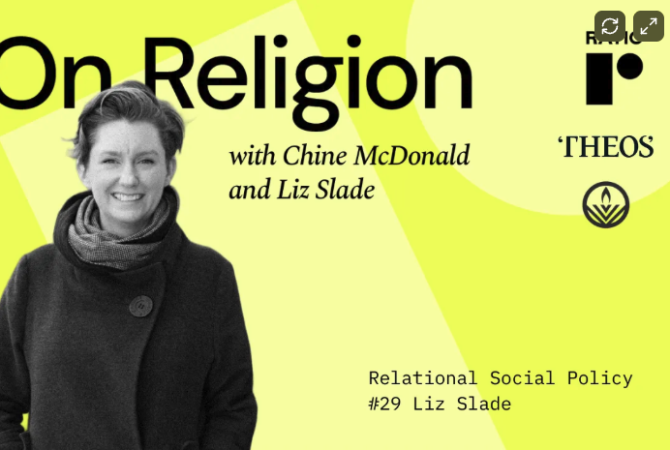
This month the interview with me came out in the Relational Social Policy podcast series on the relationship between religion and civil society, where I have (generously for the time I put in!) been credited as a co-producer, along with Chine McDonald, Director of Theos, the Christian think tank. I will be in another forthcoming episode, adding comment to Theos’ Nick Spencer’s episode on the relationship between religion and science.
Last week, I was invited to a special meeting at Lambeth Palace, convened by Christian Aid following the visit of the Archbishop of York, Stephen Cottrell, to Israel and Palestine. Church leaders and heads of Christian aid agencies were in attendance to hear the Archbishop’s powerful speech on his experience. The Archbishop of Jerusalem also spoke (via Zoom), as did Munther Isaac, a Lutheran pastor in Palestine, presenting the latest Kairos report from Palestinian churches. There was space for discussion, and breakout groups for exploration of different issues, but of course only the chance to scratch the surface in one day together. I was surprised but pleased to hear how bold and clear Stephen Cottrell’s speech was – and there were people in attendance who have worked on the ground in Israel and Palestine for decades who said it gave them goosebumps to hear his words. I would recommend reading the speech for yourself, and the Kairos report. It’s important to note that the Chief Rabbi, Sir Ephraim Mirvis, condemned the speech; a rare example of such open disagreement between senior faith leaders in Britain. In a world that often encourages us to ‘take sides’, it feels important to make the space to sit with the different voices. I spoke with a Christian Aid staff member at the end of the event who has been working in Israel and Palestine for forty years, and was grateful to witness his feeling of the impossibility of the situation there and yet his refusal to give up.