December’s update from Liz Slade
Here in midwinter, there is often a strange dynamic – the pull of quiet reflection, the mad rush to finish tasks before the Christmas break, and the hubbub of festivities. And of course for those in leadership in our congregations, the opportunity of rest is on the far side of a very busy few weeks serving our communities. It’s wonderful seeing the huge variety of festive services being offered in our chapels – from candle-lit carol services to solstice rituals to a humanist Hannukah to gatherings for those who find Christmas difficult.
The run-up to Christmas this year has had a new dimension for me this year, witnessing friends coordinating an ecumenical, grassroots rapid response to help local church leaders act wisely when some far right activists are using Christian imagery to support their message of division. The #JoyForAll campaign has some valuable resources, some ready for adoption in a Unitarian setting, some that might not quite fit. I was invited to contribute to the pack but when I came to write, I realised that my perspective was a little outside of the scope – so I shared it elsewhere.
It felt important to name that one of the reasons that so many people are turning to far right communities is because there are so few places that are offering compelling invitations to meaning, belonging, purpose, and feeling part of something bigger than themselves. This is why our work developing flourishing Unitarian congregations feels so important – we are able to offer belonging to people whatever their background, beliefs, or political opinions – something that feels ever more important in our precarious, divided society. Unitarians often quote Hungarian minister Ferenc David saying “we need not think alike to love alike” and it feels like an important time to practice creating communities of inclusion.
This context is on my mind as I reflect on 2025. It’s been brilliantly exciting to see new ministers joining the GA Roll – Tina Gandhi, Janine Sim, Keiren Mardle-Moss, Rob Foreman and Adam Slate have all been awarded Newly Qualified Minister status this year. Each of them is already in ministry, serving congregations – some of which have not had a minister in post for a while. It’s a real sign of courage and strength in our movement not only that we have talented leaders committing their lives to Unitarian ministry, but that we also have congregations committing to supporting them in their ministry.
Their leadership embodies the values that our world needs more of.
Equally heartening is the response we’ve seen to the GA’s Innovation Fund launched earlier this year. We have already awarded over £100,000 to congregations across the country – most of which has been in the form of smaller development grants to enable pilots and research as the first steps towards rejuvenation and growth.
Our hope is that the fund will enable the visions of our local leaders to become reality, making a significant impact to their communities.
Highlights of 2025 for me include collaborations with allies outside of the Unitarian movement, where we’ve had a chance to share our ethos with new people.
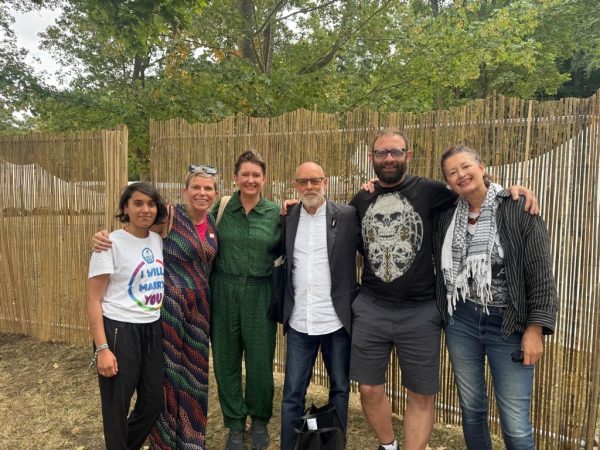
This included our presence at Greenbelt festival in the summer, our collaboration with the Decelerator, contributing to a new book “Religion and atheism in dialogue: doing difference differently” published by Routledge this summer (see Claire McDonald’s review in the latest Inquirer) – and also sharing our space at Essex Hall with others, from aligned groups needing meeting space (from the Climate Majority Project to the Long Now Foundation), to Unitarians for Climate Justice offering a welcome warm space for activists protesting over the road outside the Royal Courts of Justice. I know there are lots of collaborations happening at the local level too – sharing our free and inquiring religion with those who might not imagine walking through our doors.
I’m hugely grateful to all those keeping the Unitarian world turning, knowing that each person’s contribution is an essential part of our whole community.