May’s Letter from Liz
Each month, we publish a letter from Liz Slade, the chief officer for the General Assembly. This is Liz’s letter for May 2026.
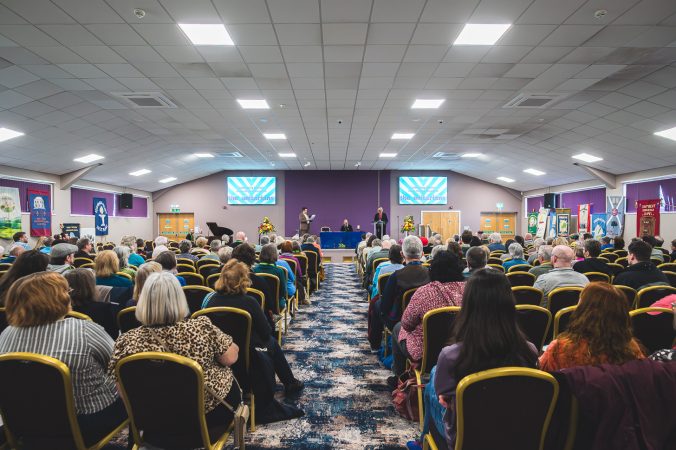
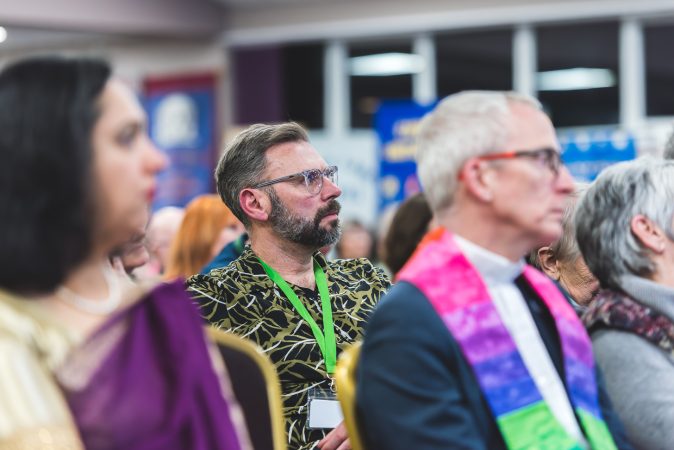
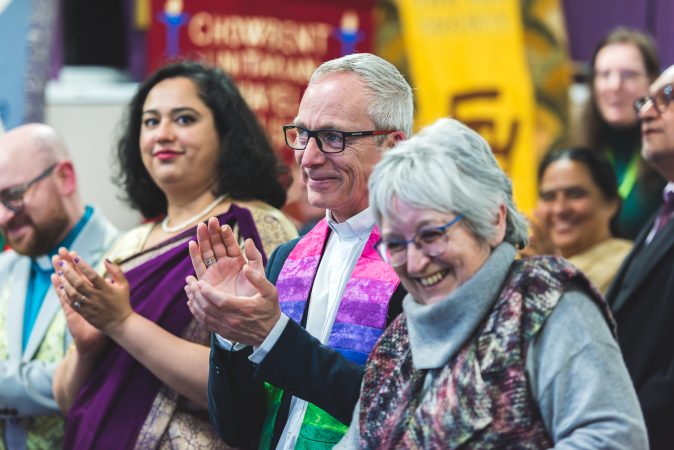
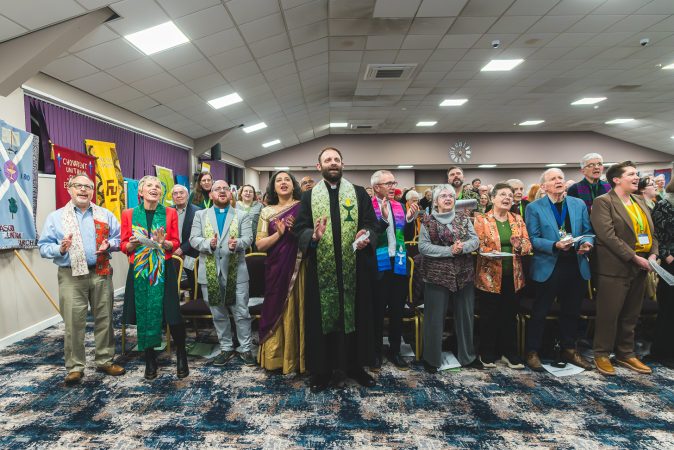
What a wonderful time we had at the annual meetings last month!
I’m always conscious that only a small segment of our movement attends, and I wonder what it’s like for those who weren’t there or perhaps have never been…
I won’t try to recount what we did and how it felt – but there are a few things I want to share.
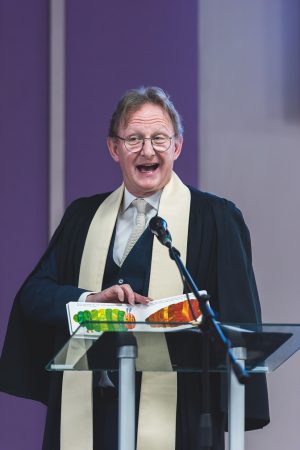
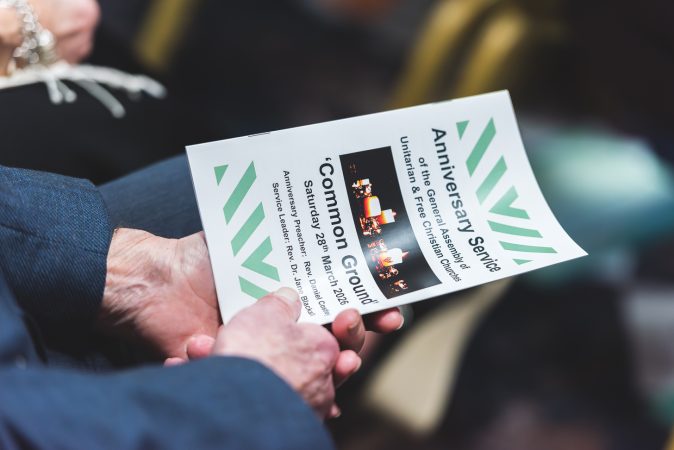
- A highlight, as ever, was the Anniversary Service, this year with Rev Daniel Costley as our preacher, and Rev Dr Jane Blackall as service leader. They were a phenomenal team, and I’m always glad that the Inquirer prints the Anniversary Preacher’s sermon afterwards as the busyness of the meetings means I forget was said – but as Maya Angelou said, you don’t forget how people made you feel.
- Part of the anniversary service was welcoming new ministers on the GA Roll of Ministry – it was glorious to welcome Rev Tina Gandhi, Rev Janine Sim, Rev Kieren Mardle-Moss, Rev Robert Foreman, Rev Adam Slate and Rev Gavin Byrne. I felt like we were all beaming with pride to welcome their ministry to our movement.
- Rev Phil Waldron started the whole weekend beautifully with an uplifting and powerful opening worship, and our new co-Presidents Rev Jean Bradley and Rev Alex Bradley’s closing worship was joyful, funny, and moving.
- There was a rich mix of workshops and talks and I won’t try to name them all, and couldn’t pick highlights. But it’s also worth noting that our change this year to have slightly fewer breakout sessions and a bit more space to catch our breath seemed to work well.
- Our keynote speaker, Sarah P Corbett, speaking on her experience as a ‘craftivist’ was popular even with those who didn’t identify either as activists or crafters! Her message spoke to the importance of listening, connecting, and building bridges as much as it did of creativity and protest.
- We passed three resolutions – giving the Chief Officer more freedom to make public statements beyond the positions specified by resolutions; confirming protest as a Unitarian spiritual practice – that is at risk of being hampered by current and proposed laws restricting the right to protest; and against the war in Iran, calling on support of aid agencies operating in the region.
- On the first one, I am following up with the Social Justice Network and other stakeholders on how we turn the resolution into action. With a small team and limited resources, it is essential that we choose how to make our voice count. The motion referenced the Quakers’ great work in this area, and I’m grateful that my Quaker counterpart, Paul Parker, has offered to share their ways of working (though I am always conscious that the Quakers have many times more staff than we do, so creativity and discipline will be needed!).
It’s important to note that amid the joy and positivity of the annual meetings, it’s also a place for us to face up to the trickier challenges that face our movement. We were grateful to hear from Robert Ince who over the last year has been stepping in to help stabilise the Southampton congregation, after significant concerns about operations there led to an investigation from the Charity Commission, and police involvement. There are vulnerable congregations across the country, and they are a collective risk – weak governance that allows poor practice in a congregation doesn’t only cause risks to people involved at that congregation, or to the local assets, but of course reputational damage affects all of us. We can’t gloss over this and hope for the best – and the nature of our movement means that responsibility for supporting vulnerable congregations does not rest with the GA, but with all of us.
We are glad to be creating a space for local trustees and committee members to get together to better understand their responsibilities and learn where they can access training. Lizzie Kingston-Harrison announced some new ‘Essential Trustee’ sessions that she is hosting in the summer.
The annual meetings are also an opportunity for me to share my perspective as Chief Officer, the view from the crow’s nest over our flotilla of boats, as I sometimes think of it. I won’t share my whole report here, but looking back at my notes, I’ll end this letter with how I ended my report – I know that it’s relevant to many more people in our movement than could be at the annual meetings this year.
“When I look at the parts of our movement that are flourishing, I try to see what they have in common.
My best theory at the moment is this.
There is someone there with a clear vision and sense of calling, and they are able to express that vision with credibility in a way that inspires others. Their inspiration means that the vision-holder isn’t working alone, but holding something that others can support – giving their time, their gifts, and making resources flow.
I wonder who comes to mind for you when I say that. Who are the people in your neck of the woods holding a clear vision and a sense of calling, who you feel inspired by? Are they getting the support that they need? What would it mean to back that person? To let resources flow? To let them have the space to see clearly?
One of the speakers at the recent conference ‘The Quiet Revival: Myth, Memory or Movement?’, Robert Pope, a URC minister and historian, said ‘The whole idea that churches should be big is a Victorian idea. They should be places of transformation that change our view of what the world should be.’
Another speaker, East End Baptist minister Sally Mann said of strengthening congregational life ‘I wouldn’t start with changing Sunday services; start with wondering what the Kingdom of God looks like and how we can create it; measure the growth of the fruit of the spirit.’
You might translate that to different language in your context, but it feels like a compelling invitation for our congregations.
This opening up to meet the urgent needs of today might need some letting go. Think of the way we create more space for these places of transformation for the people who are hungry for them, and the way we allow the growth of the fruit of the spirit – they might need us to let go of some things we love, to let them take a different shape, to simplify, to rearrange our priorities. To let things take the shape that meets today’s urgent needs, and the calling of those holding a clear vision of the future.
And if you are one of those vision-holders, the thing we really need you to do now is to ask for help.
Your vision is likely bigger than you can bring into being on your own. But my experience tells me that it’s asking for help that creates the space for transformation to happen.
I invite you this weekend to practice asking for help, and to pay attention to who might inspire you. I know that both help and inspiration are here in abundance.”