Innovation Fund Case Study: Cambridge Unitarians
Games, Recipes & Equality: exploring shame and self-compassion
Organisation: Aisha Madha and Cambridge Unitarian Church
Location: Cambridge
Grant type and amount: Development Grant – £2,140
Project timeframe: November 2025 (two-day workshop)
What was the idea?
How can we build communities where people feel accepted, valued and able to be themselves?
Cambridge Unitarians wanted to explore the role that shame plays in our lives, relationships and communities, and how self-compassion can help challenge it.
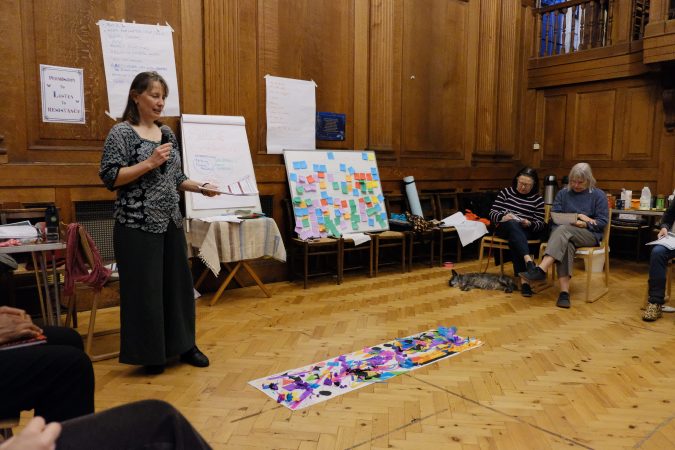
Led by Aisha Mada, a self-compassion trainer and member of the congregation, Games, Recipes & Equality was designed as a two-day, interactive workshop exploring shame, equality, hierarchy and compassion.
What is self-compassion?
Self-compassion means recognising and understanding our own feelings and responding to ourselves with care, rather than criticism. It isn’t about making excuses or putting ourselves first at the expense of others. It is about recognising that we are human, that everyone struggles, and that we deserve the same kindness we would offer someone else.
Aisha introduced three elements of self-compassion:
- Mindfulness: noticing and acknowledging what we are feeling.
- Common humanity: recognising that struggle and imperfection are part of being human.
- Self-kindness: responding to ourselves with understanding rather than harsh judgement.
The project explored how developing these skills can help people build healthier relationships and create more compassionate, inclusive communities.
What did they do?
The two-day workshop brought together 13 participants, alongside a baby and a dog!
Activities included:
- Exploring the origins and effects of shame, including how it influences our behaviour and relationships.
- Interactive exercises and games to help participants recognise shame in everyday life.
- Exploring the three elements of self-compassion.
- Reflection, discussion and practical exercises to help participants apply what they had learned.
- Developing personal plans for practising self-compassion beyond the workshop.
The programme was designed to be accessible and enjoyable, while recognising that discussing shame can be challenging and emotionally demanding.
The church minister, trustees and volunteers provided practical and pastoral support throughout.
What happened?
The workshop was very well received. Participants described it as thought-provoking, empowering and, for some, groundbreaking.
A particularly successful element was the interactive approach. Activities such as the ‘shame game’ helped participants recognise patterns of behaviour and understand how shame can influence their lives in ways they hadn’t previously considered.
The friendly atmosphere also helped people connect, with new friendships formed during the two days.
There were some practical challenges. Activities took longer than expected, meaning some content had to be cut. Participants also found there was a lot to take in, and several wanted more time to explore and practise self-compassion.
What difference did it make?
The feedback was overwhelmingly positive:
- 100% of participants said they were likely or very likely to recommend the workshop to others.
- Participants gained a better understanding of shame and its influence on their lives and relationships.
- People developed practical ideas for responding to themselves with greater compassion.
- New friendships and connections were made.
- The project gave the congregation greater confidence to organise similar activities in future.
One participant commented:
“I think this was a really important topic and I don’t know where else I could have gone for a practical course on this.”
There is also a wider significance for Unitarian communities. Self-compassion can help us think about how we treat ourselves and each other, and how we create communities where people feel safe, accepted and valued.
What did they learn?
Aisha identified several important lessons:
- Give people time. The subject matter is substantial, and participants wanted more opportunity to explore and practise self-compassion. A shorter, more focused workshop or a longer retreat might work better.
- Set expectations clearly. The workshop title and advance information could have explained the content and activities more clearly.
- Allow plenty of time. Exercises took longer than anticipated. A realistic timetable, with sufficient breaks, is essential.
- Build a support team. Running a workshop of this nature requires more people than you might expect, including help with administration, refreshments, accessibility and emotional support.
- Create a safe environment. Establishing boundaries and community agreements at the outset helped participants engage with potentially difficult material.
What’s next?
Cambridge Unitarians are keen to build on the experience.
Ideas include introducing self-compassion into congregational governance meetings, developing a shorter three-hour workshop focused specifically on self-compassion, and exploring a longer retreat on shame and self-compassion.
Aisha has also gained confidence in her ability to deliver this kind of work again.
What could other congregations take from this?
This is an approach that could be valuable to many Unitarian congregations.
Self-compassion isn’t simply a personal wellbeing topic. It has something important to say about how we relate to one another, how we handle disagreement, how we respond to mistakes and how we build communities based on equality rather than judgement.
A workshop like this could be particularly useful for:
- Congregations wanting to strengthen relationships and develop a more compassionate culture.
- Groups exploring inclusion, equality and non-hierarchical ways of working.
- Ministers, trustees and lay leaders interested in how shame and self-criticism affect community life.
- Communities looking for a different kind of event that brings people together around shared reflection and learning.
Aisha is interested in sharing this work with other congregations. If you would like to explore running a similar workshop in your church or chapel, you could get in touch to discuss what’s possible.
“I fully believe that sharing these skills and knowledge helps people to have better relationships. And better relationships help people to create a better world.” — Aisha Mada